
← Go back
From Startup Idea to Software Architecture: Introducing the AI Product Architect
 Olena Tkhorovska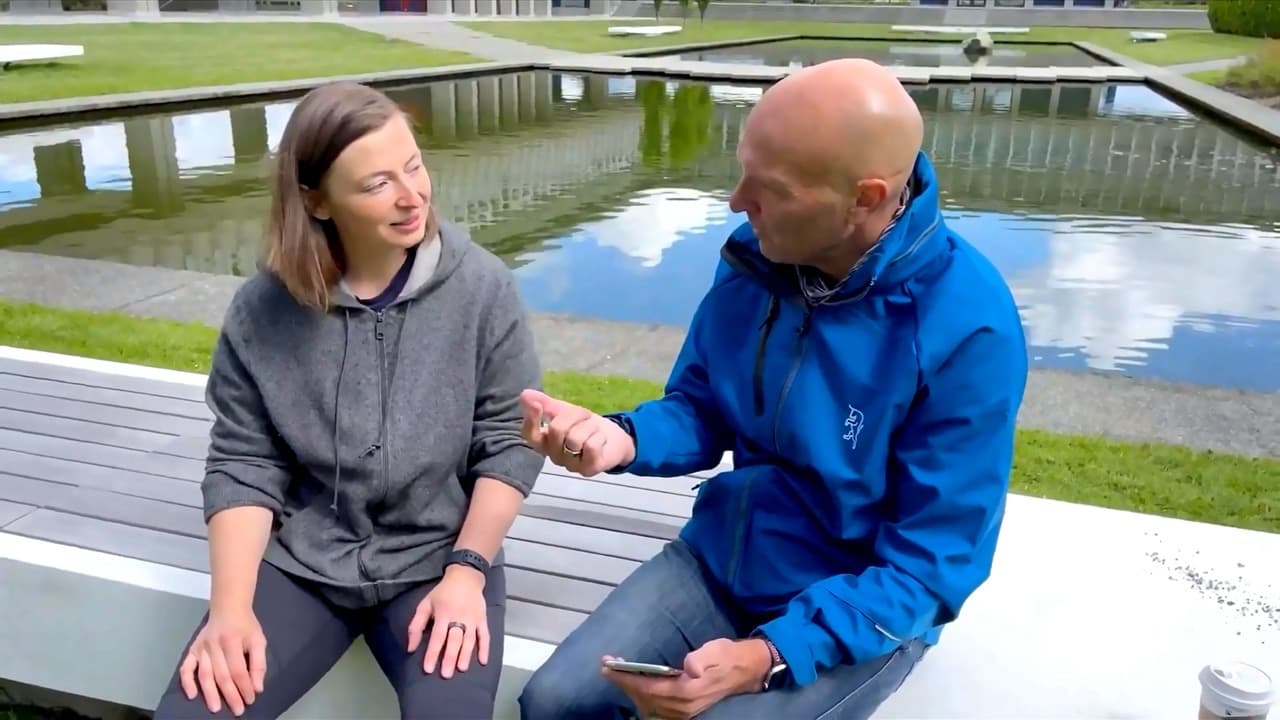
Olena Tkhorovska and Jerry Kroll discussing a startup idea
A tool to help founders turn software ideas into real platforms
Each week I speak with founders who have ideas for software products. Some involve AI. Others focus on data, health platforms, financial, or SaaS tools.
The early questions are often the same.
How should this product actually be built?
What should the first version include?
Where does AI add real value?
These questions appear before the first line of code.
Another change we see today is the rise of AI coding tools. Tools like Claude Code, Codex, and Cursor can generate large amounts of code quickly.
But code alone is not system design.
AI can produce a prototype very quickly. But without product architecture the result is often either too complex or too fragile for production.
Founders still need a clear product structure. They need architecture, data design, and a roadmap.
This is one of the reasons we built a new tool.
Meet the AI Product Architect
We recently launched a custom GPT called AI Product Architect.
This tool helps founders, businesses, and researchers think through a new software product. It works like an early stage product architect conversation.
You describe an idea. The AI helps turn that idea into a practical platform plan.
The goal is simple. Move from concept to architecture.
How the AI Product Architect Works
The system follows a structured approach we use when planning new platforms.
When someone shares an idea, the AI works through five steps.
1. Clarify the product vision. The AI identifies the problem and the users.
2. Define the MVP. The AI proposes a small set of features for the first version.
3. Design the architecture. The AI outlines the core system structure. Frontend. Backend. Database. Infrastructure.
4. Identify AI opportunities. The AI suggests where AI could add real value. Examples include assistants, analysis tools, and intelligent search.
5. Create a development roadmap. The AI outlines a path from idea to working platform. This mirrors the process we follow when planning real products with founders.
Three Questions That Shape a Product
Every conversation begins with three simple questions. These questions shape the architecture of the product.
1. What problem does your product solve and who are the users?
Example answers:
A platform that helps people track metabolic health.
Software that helps nutrition coaches monitor client progress.
A tool that analyzes wearable health data.
2. What is the main action users perform?
Example answers:
Users upload health data and receive AI insights.
Users track sleep, activity, and nutrition metrics.
Coaches review dashboards and provide recommendations.
3. How will users access the product first?
Example answers:
Mobile app first.
Web platform first.
Mobile first with a web dashboard.
These answers help determine the architecture direction.
Example: A Health and Wellness Platform
Imagine a founder exploring this idea.
“A platform that helps people understand their health data using AI.”
The AI Product Architect can help shape the system.
Possible architecture:
Frontend – React and Next.js
Mobile – React Native or Flutter
Backend – Python or Node.js services
Database – PostgreSQL
AI layer – Health insights using OpenAI, Anthropic, or Gemini
Infrastructure – Google Cloud with Docker and Kubernetes
This structure forms the foundation for many health and data platforms.
Built on Real Product Experience
The architecture suggestions reflect real production systems.
Pieoneers has delivered software platforms and AI integrations across several sectors.
These include:
Health and wellness platforms
Life sciences software
Research and academic systems
Financial forecasting platforms
Manufacturing and hardware software
Data and analytics platforms
SaaS products for startups
These projects involve both startups and established companies.
The goal of the AI Product Architect is to reflect what works in real production environments.
Who This Tool Is For
The AI Product Architect is useful for several groups.
Startup founders – People exploring a new product idea.
Business leaders – Teams planning internal software or SaaS platforms.
Researchers – Groups designing data platforms or AI tools.
Innovation teams – Organizations exploring new digital products.
From Idea to Implementation
The AI Product Architect helps clarify thinking.
It helps founders understand:
what is possible
what is practical
what a real system might look like
A working platform requires engineering and expertise.
At Pieoneers we help organizations:
design product architecture
build scalable software platforms
integrate AI into production systems
Many projects begin with the same conversation that inspired this tool.
Start the Conversation
If you have a software idea, you can start a conversation with the AI Product Architect.
✔︎ Describe the idea.
✔︎ Answer a few questions.
✔︎ Explore the architecture.
Sometimes that conversation is enough to unblock your thinking. Sometimes it reveals that you are ready to move forward. If you want to go deeper, you can also speak with the Pieoneers team.
We are always happy to discuss new ideas, product architecture, and real platform design.
You can start in two ways:
Try the AI Product Architect

AI Product Architect By Pieoneers Software
Begin the conversation and explore your idea. Link: https://chatgpt.com/g/g-MDVAVVqLS-ai-product-architect
Talk with Pieoneers
Schedule a discussion with our team about your product. Link: https://call.pieoneers.com/
Many real platforms start exactly this way.
✔︎ A simple conversation.
✔︎ A clear idea.
✔︎ Then the system design that brings it to life.
Related services

Olena Tkhorovska
CEO at Pieoneers